A bilingual website is not an English site with a translate button added at the end. For many organisations in the UAE, Arabic and English are both primary languages. The structure, the design and the way content is published need to be agreed together.

Decide what each language is for.
Start with the people using the site. Some visitors will read everything in Arabic. Some will use English. Others will switch, especially on a phone, when a product name or a form label is clearer in the other language.
Write down which pages exist in both languages, which content can differ by market, and which journeys must match exactly. A careers page, a product catalogue and a customer portal rarely need the same treatment.
This is also the moment to agree the default language, how the switch is shown, and what happens when a page has not been translated yet. A missing page should not dump someone into the wrong language without an explanation.
Design the page for Arabic.
Arabic is read from right to left. Navigation, forms, icons that point forward, and the alignment of headings all need to follow that direction. Mirroring an English layout is the starting point, not the finished design.
Arabic text is often longer or shorter than the English it sits beside. Buttons, menus and cards need room to grow without breaking the line or hiding the label. Test with real sentences, not with a single word like “الرئيسية”.
Typography matters as much as layout. Choose an Arabic typeface that is comfortable at body size, and check numbers, dates and mixed product names. A page that looks calm in English can feel crowded once the Arabic is in place.
Give editors a workable process.
Someone has to own each language. That might be an in-house team, a translation partner, or a mix of the two. Agree who writes the source, who approves the translation, and how updates stay in step when a price, a date or a policy changes.
In Umbraco, the practical setup is a language variant of each page, with shared structure and separate copy. Editors should be able to see what is missing, preview both directions, and publish one language without accidentally overwriting the other.
Machine translation can help a first draft. It should not be the last step on a customer journey, a legal page or anything that carries a brand voice. Plan a human review for the pages that matter most.
Amlak, in Arabic and English.
Amlak International is a financing company in Saudi Arabia. The brief was an Arabic and English website on Umbraco, which is the same problem many organisations in the UAE bring to a bilingual build. Cold Banana delivered the platform with Vue.js and .NET, working with Amlak’s marketing, IT, cybersecurity and digital teams.
Arabic and English are language variants of the same pages. The structure is shared and the copy is separate. Editors can see what is still missing in one language, preview it, and publish that language without overwriting the other. That is the multilingual setup in Umbraco, rather than a translate button placed on an English site.
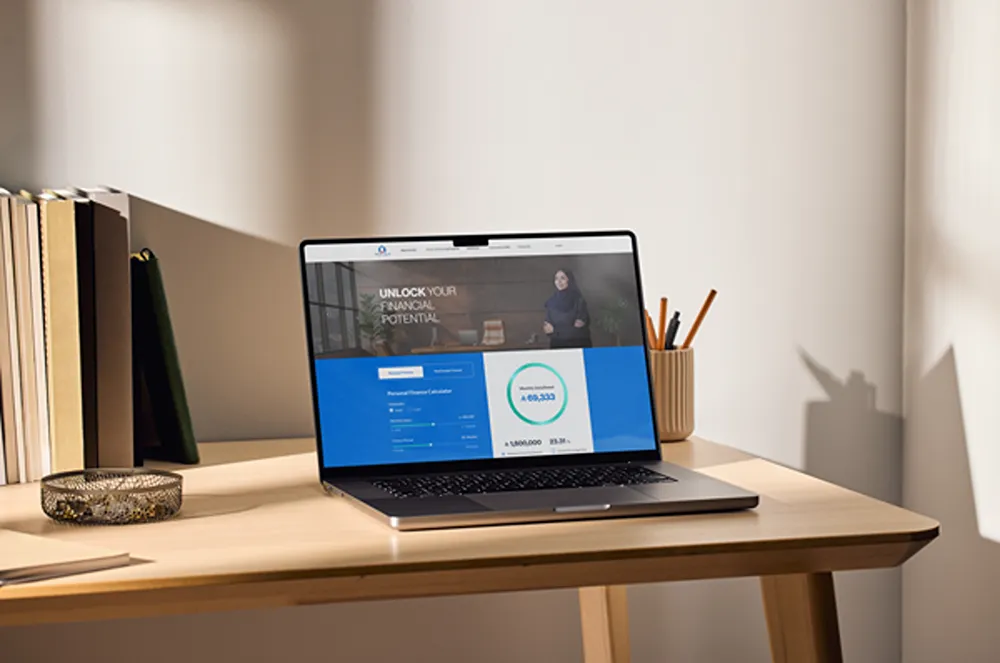
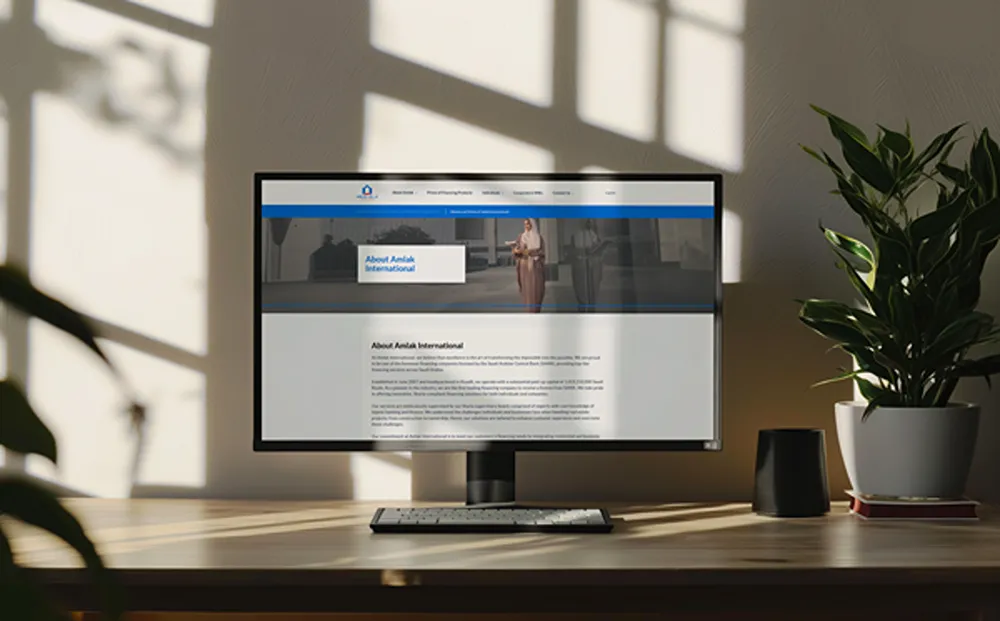
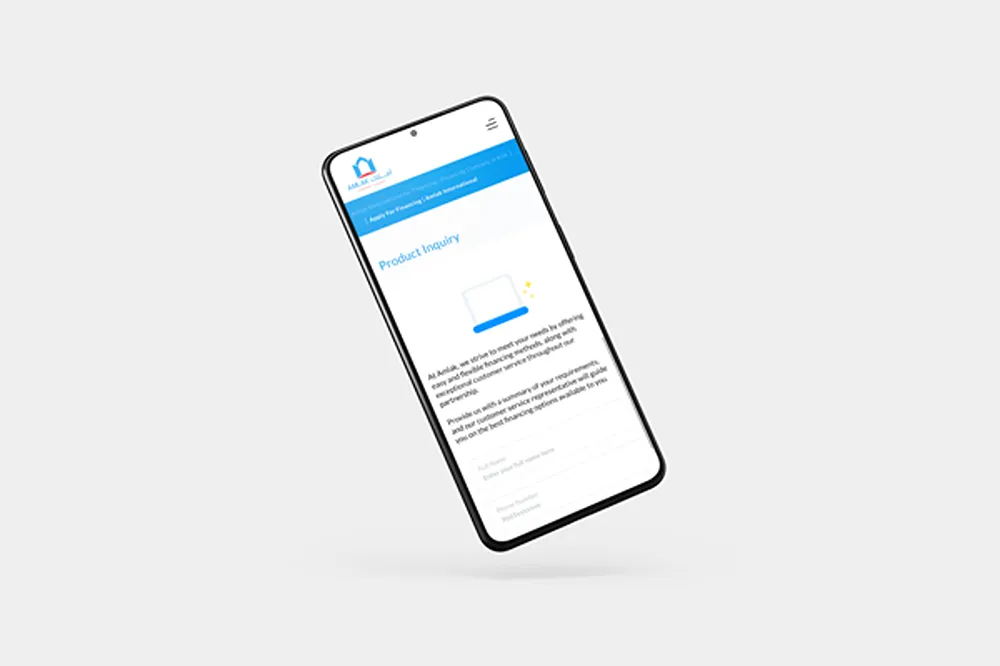
Arabic is the language visitors meet first, and English is published as its own version. The homepage, the company pages and the enquiry had to work in both, including where Arabic runs from right to left. The pictures below are from the website: the homepage and personal finance calculator, the company page, and the product enquiry on a phone.
Test the journeys before launch.
Click through the real tasks in both languages: finding a service, completing a form, reading a confirmation and coming back later from a shared link. Check that emails, PDFs and downloads follow the language the person chose.
Look at the site on a phone, in both directions, with the same content your editors will publish. Search titles, social previews and page URLs should be understandable in the language they represent.
Cold Banana plans this with UAE organisations as part of an Umbraco build, from the first content model to the pages your team will look after. The aim is a website that feels considered in Arabic and in English, not translated as an afterthought.